Technology can detect. But awareness decides. That distinction is no longer theoretical - it is the operating reality for every organization defending itself against modern cyber threats. In 2023, 70% of data breaches involved the human element, and a massive majority of security breaches involve human error in some form. The average cost of a data breach in 2022 was $4.35 million, a figure that has only climbed since. These numbers make it clear: awareness is the new security layer, sitting alongside firewalls, XDR, and SOC operations as a critical line of defense.
Consider the everyday scenarios that still drive security incidents: a single click on a convincing invoice in early 2025, a delay in reporting a suspicious login alert over a weekend, a decision to reuse a password across personal and corporate accounts. Each of these is a human moment, not a technology gap. At SHELT Global, we see this pattern daily across our finance, telecom, government, and tech clients. The tools generate signals. But it is people - their decisions, their timing, their judgment - who determine whether an attack succeeds or fails. That is why cyber resilience in 2026 depends on treating awareness not as a nice-to-have, but as a full security layer.
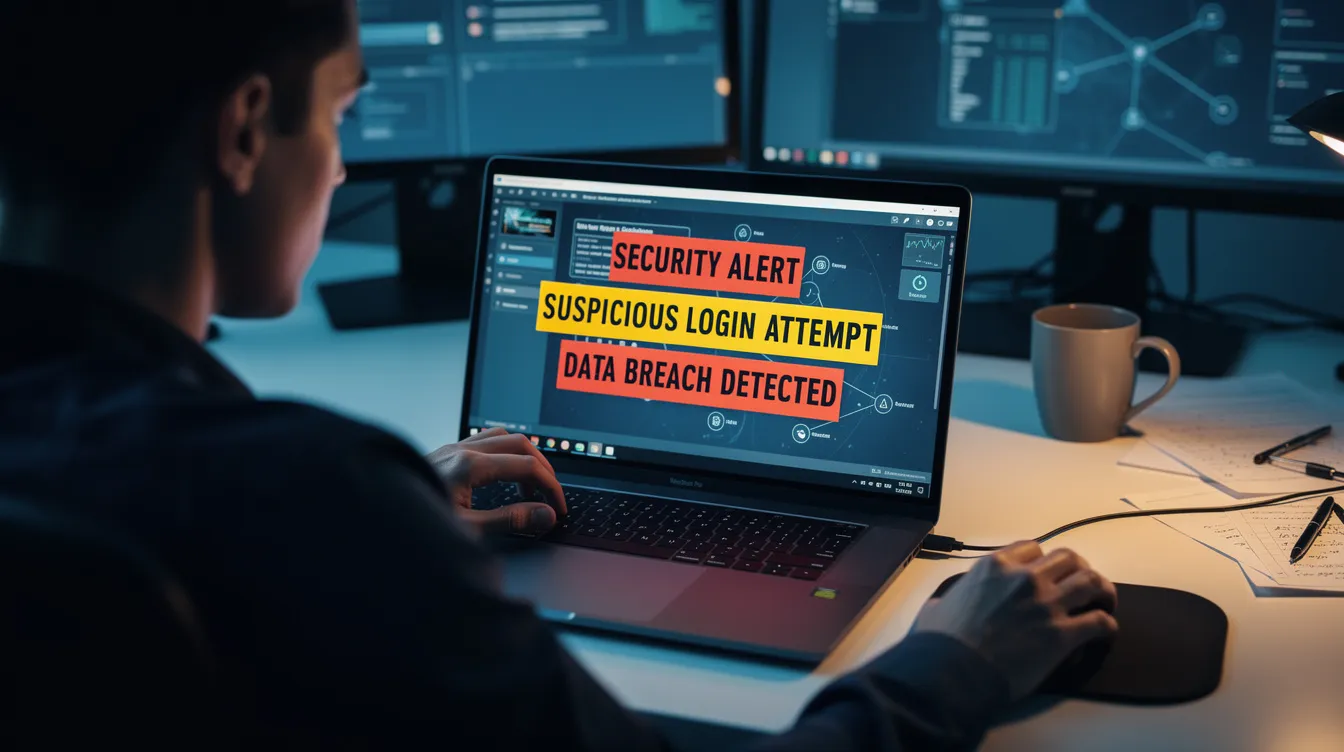
Security has historically been framed as a problem of tools, alerts, and systems. Organizations invest in endpoint protection, deploy antivirus software, build SOC teams, and configure detection rules. Yet incidents still reduce to the same three things: a click, a decision, a delay. In 2024, an Arup Engineering employee in Hong Kong joined a video call where every other participant was a deepfake. Over several transactions, approximately US$25.6 million was wired to attacker-controlled accounts. In the same year, a Ferrari executive received a WhatsApp call from someone impersonating CEO Benedetto Vigna using voice cloning. The executive asked a personal verification question the imposter could not answer, and the attack was aborted. One case ended in catastrophic loss. The other ended with a single moment of awareness.
These are not isolated examples. Business email compromise cost U.S. businesses $2.9 billion in 2023. One in three data breaches involves phishing attacks. MFA fatigue attacks, where employees are bombarded with push notifications until they accept, have become routine. Invoice fraud, CEO deepfake voice scams, and collaboration app exploits all bypass technical controls by targeting trust, urgency, and authority. Humans do not fail because they are careless. They fail because the environment - Slack, Teams, email, mobile, APIs - moves too fast for purely technical controls to cover every decision point.
This is the shift: from static perimeter security to dynamic, behavioral security where awareness is treated as a continuous, adaptive control. Awareness acts as the crucial human firewall layer in cybersecurity. When a finance team member pauses to verify a domain mismatch, or a developer questions an unusual OAuth approval, they are executing a security control. That control is awareness, and it is now as important as any rule in your SIEM.
Modern cyber threats - ransomware, business email compromise, API abuse, brand impersonation - are designed to exploit human error, judgment, and time pressure. Attackers craft AI-written phishing emails, deploy QR-code phishing in corporate lobbies, and send collaboration app invites that mimic internal workflows. Ransomware attacks cost businesses over $1 billion in 2023, and many of those incidents began with a single compromised credential obtained through social engineering.
Even with strong SOCaaS, XDR, and endpoint tools, attackers often succeed by bypassing technology through trusted humans. The channels where the human element is targeted are everywhere: email, messaging apps, shared cloud workspaces, self-service portals, and support desks. Social engineering tactics are tailored to each channel, exploiting the speed and informality of digital collaboration. Organizations without training may see a 30% increase in malicious link clicks, widening the gap between what tools can catch and what humans let through.
Data protection obligations reinforce this reality. The general data protection regulation, NIST frameworks, ISO 27001, and the NIS2 Directive all explicitly recognize human behavior as a security factor. Compliance is no longer just about technical measures - it is about demonstrating that your people can recognize threats, protect sensitive information, and report suspicious activity in real time.
Picture a finance team member in late 2024 receiving an email from a known supplier. The domain looks right at a glance, the branding is perfect, and the message asks for a routine bank detail update. The employee processes the change. Two days later, a $340,000 payment lands in an attacker-controlled account. The organization's email gateway flagged the message as low-risk. The SOC had no alert to escalate. The awareness layer - noticing a subtle domain mismatch, questioning why the supplier would change banks mid-contract - could have interrupted the chain.
In a parallel scenario, a developer at a SaaS company approves an OAuth app integration request that appears to come from a trusted vendor. The app is malicious, granting the attacker the ability to gain unauthorized access to internal repositories. Meanwhile, a manager ignores a weekend login alert because similar false positives have cluttered their inbox for months. In each case, tools generated signals, but human interpretation and action decided the outcome. Proactive threat detection relies on educated employees who identify red flags. Trained staff can act swiftly to isolate and report attacks. Informed employees are more likely to actively spot suspicious activities before damage compounds.

There is a vast difference between a one-off security training session and an ongoing cybersecurity awareness program focused on behavior change. In 2020, only 11% of businesses provided cybersecurity training to non-cyber employees. That gap has narrowed, but many organizations still treat awareness as a checkbox rather than a control. Continuous security training reduces the likelihood of catastrophic mistakes, and effective training reduces phishing click-through rates by 25% within six months. Modern training emphasizes continuous engagement over annual sessions, because threats do not wait for your next scheduled refresher.
Awareness can be positioned as a security control that is designed, tuned, and measured like any other control in an information security management system or SOC playbook. The components of a modern awareness and training approach include micro-learning modules, phishing simulations, just-in-time prompts integrated into workflows, incident reporting practice, and structured feedback loops. The goal is not to make every employee a cybersecurity professional. It is to enable one or two correct decisions at high-risk moments - the moments that separate a near miss from a breach.
Traditional security awareness training - annual videos, generic quizzes, a slide deck reviewed once and forgotten - meets compliance requirements on paper but rarely reduces actual data breach risk caused by human error. Research consistently shows that traditional training methods do not materially shift click rates or reporting behavior in real environments. Organizations with a prepared workforce experience significantly fewer security incidents, but preparation requires more than content delivery. It requires context.
A behavioral approach to security awareness focuses on real decisions in the flow of work. It is not content-centric but context-centric: the right message, the right trigger, the right user, at the right time. Effective training reduces click rates on phishing emails not because employees memorize rules, but because they develop instincts. A security awareness training program must evolve as fast as AI-driven phishing and deepfake attacks. If your training content has not changed in twelve months, it is already outdated against evolving threats.
Practical interventions make awareness a live security layer. Contextual warnings in email clients prompt users when they are about to send sensitive data to an external address. Collaboration tools display banners when risky keywords or unusual sharing patterns are detected. Finance and HR teams use "pause and verify" checklists before executing wire transfers or payee changes. Developers receive secure coding nudges inside their IDEs when accessing API endpoints that handle patient data or other sensitive information.
Modern training uses personalized paths for different roles, ensuring that a call center agent receives phishing awareness training tailored to social engineering on phone calls, while a developer focuses on API security and secure coding. Multi-channel training addresses threats across various platforms - email, intranet, Teams, Slack, digital signage, and LMS. Generative AI enhances simulations for realistic training scenarios, producing simulated phishing attacks and simulated attacks that mirror the exact lures targeting your industry. These interventions function as a live control, complementing technical detection and response.

A culture of security looks like this in practice: people challenge unusual requests without hesitation, leaders model secure behaviors visibly, and incident reporting is encouraged rather than punished. Security awareness should be a collective organizational habit rather than just an IT problem. When corporate security becomes everyone's responsibility, the organization becomes resilient at every decision point, not just at the perimeter.
Culture is created by repeated behaviors, not slogans. Daily micro-actions - locking screens, verifying payee changes, escalating suspicious emails - build the muscle memory that prevents breaches. Demonstrating sound security practices preserves customer loyalty and public confidence, which means culture directly impacts business outcomes. Security becomes deeply embedded in the organizational culture with awareness training that is consistent, visible, and reinforced by leadership. Effective security awareness training often protects employees in their personal lives too, extending the value of your investment beyond the office.
Rapid, accurate incident reporting is now as important as prevention. A strong awareness program teaches personnel how to report suspicious activity - unusual login prompts, misdirected emails containing personal data, suspicious supplier requests, or compromised credentials. Early detection through employee awareness efforts can significantly cut breach impact and regulatory exposure. Cyberattacks can spread quickly, as seen with WannaCry in 2017, which infected over 200,000 systems across 150 countries in a matter of hours. The difference between containment and catastrophe is often the speed at which someone picks up the phone or clicks "report."
An effective awareness program normalizes reporting "almost incidents" without blame. When staff are trained to report suspicious behavior and suspicious activity without fear of reprimand, they become sensors for the SOC - extending detection capability far beyond what technical tools alone can achieve. This aligns directly with NIS2 and ISO 27001 expectations around timely detection, escalation, and incident reporting of security events.
Executives and managers play a decisive role in whether a security awareness program succeeds or stalls. When senior leaders take part in phishing tests, call out good catches publicly, and avoid exempting themselves from employee training, the message is clear: awareness matters at every level. Regular awareness training reduces the likelihood of falling victim to scams, and that discipline must start at the top.
Key awareness KPIs include phishing click and report rates, time-to-report suspicious activity, secure data handling errors per quarter, and training completion with behavioral follow-up. Behavioral improvements include stronger password habits and safer data handling across the organization. Security awareness programs deliver high returns on investment by preventing costly data recovery, regulatory fines, and reputational damage. These metrics should sit alongside technical SOC metrics like mean time to detect and mean time to respond, proving that awareness is a measurable security layer visible to CISOs and risk leaders alike.
A security awareness program that behaves like a genuine control follows the same lifecycle as any other element in your security posture: it is planned, implemented, monitored, and improved. The following stages - assess, design, deliver, measure, improve - align with standards like ISO 27001 and NIST frameworks, ensuring your program meets both compliance requirements and operational reality.
Review past incidents and near misses from 2022 to 2025: phishing, misdirected emails, misconfigured sharing, weak password security, shadow IT. Use SOC data, penetration testing reports, red team findings, and risk assessments to assess risks and map the top decision points where awareness matters most. Stakeholder interviews with finance, HR, development, and customer support teams uncover behavioral risk patterns that technical logs alone cannot reveal. Organizations face fines for non-compliance with data protection regulations, making this assessment both a security and a business priority.
Translate risk scenarios into specific behaviors. For example: "Finance validates all bank changes via a second channel before processing" by Q4 2026. Set measurable targets - reduce misdirected sensitive emails by a defined percentage, increase incident reporting rates quarter over quarter, cut phishing click rate by 25% within six months. The difference between "employees know the policy" and "employees consistently do X when Y happens" is the difference between a training program and a control. Short, measurable behavior statements steer the entire awareness program design and make fewer mistakes the expected outcome.
Recommend a mix of formats: bite-sized e-learning, live sessions for high-risk teams, phishing simulations, role-based workshops, and quick-reference guides. Training should include phishing simulations to improve real-world response, and simulated phishing attacks should mirror realistic attacks currently targeting your sector. Delivery channels should span email, intranet, Teams or Slack, digital signage, and LMS. Tailor training materials for different learning styles and roles: developers focus on API security and secure coding, executives on whaling and wire fraud, call centers on social engineering, and IT admins on privileged access hygiene. Automated reporting simplifies compliance tracking and audits, ensuring every activity is documented.
Connect awareness metrics to SOCaaS and XDR insights: correlate simulation results with real alerts, monitor changes in incident reporting volume and quality, and analyze user behavior to identify patterns across teams. Quarterly reviews of KPIs should trigger updates to training content based on emerging threats and internal incident trends. Maintaining a robust awareness program provides clear evidence of compliance during audits for ISO 27001, GDPR, and NIS2. Successful programs require ongoing investment and relevant content - feed awareness outcomes into your risk register and ISMS continuous improvement cycle. Regular training updates are necessary to keep pace with evolving threats, keeping your program up to date and operationally relevant.

At SHELT Global, we operationalize awareness as a managed security layer - not a standalone program, but an integrated component of our SOC-as-a-Service, XDR, GRC consultancy, penetration testing, Brand & VIP Protection, and API security engagements. We help clients integrate phishing simulation outcomes into SOC playbooks, tune XDR rules based on user behavior, and build awareness strategies that prepares employees for the specific threats targeting their sector. ISO 27001 requires ongoing awareness training to prevent human error and requires employee awareness of security policies. The NIS2 Directive mandates awareness training for IT system access. Compliance with GDPR requires training on data handling responsibilities. Many global data protection laws mandate formalized security awareness training. We help our clients meet every one of these obligations while building genuine resilience.
In practice, this means a bank in 2025 can combine behavioral training, brand monitoring through REVA, and managed detection to reduce wire fraud attempts. A telecom provider can train employees to recognize brand impersonation domains while our SOC monitors for the same threats in real time. The result is a secure environment where awareness and technology reinforce each other at every layer.
Our threat intelligence feeds shape awareness content directly. When we detect phishing lures targeting a client's brand or sector-specific scams circulating in the wild, that intelligence flows into the next round of simulations and training. SOC analysts and awareness programs form a feedback loop: analysts share patterns, awareness changes user behavior, and improved behavior reduces noise while increasing detection quality. We help cybersecurity professionals raise awareness not as an abstract goal but as a measurable, operational output.
When staff know how to respond to brand impersonation domains or suspicious API access requests, the entire security chain strengthens. Awareness, when managed and integrated, operates as a live, adaptive security layer - one that SHELT Global helps maintain and improve continuously. The goal is to educate employees so that every team member contributes to the organization's ability to maintain customer trust and protect sensitive data.
In 2026, the decisive factor in many data breaches is no longer a missing tool but a missing moment of awareness. Seventy percent of data breaches involved the human element in 2023, and that proportion has not meaningfully declined. The technology stack matters, but it cannot compensate for a workforce that has not been trained to recognize threats, report suspicious activity, or pause before acting on urgency. Security has become behavioral as much as technical, and awareness must be designed, measured, and improved like any other control. An ongoing training commitment, embedded into workflows and reinforced by leadership, is what separates organizations that experience fewer mistakes from those that face catastrophic loss.
We encourage every mid-market and enterprise organization to audit where a single click, decision, or delay could still bypass your defenses - and to formalize awareness as part of your defense-in-depth strategy. If you are ready to turn awareness into a managed, integrated security layer within your broader cybersecurity program, talk with SHELT Global. We are here to help you build the human layer that your technology depends on.
.png)
© SHELT 2023 Privacy Policy | Terms & Conditions


.png)
