Before the researchers published their findings. Before the CVE was assigned. Before your IT team had any idea something was wrong the stolen credentials, leaked API keys, and exfiltrated CI/CD secrets from the LiteLLM supply chain attack were already appearing on dark web forums and criminal marketplaces the dark web, the parts of the internet not indexed by normal search engines. That is what dark web monitoring is for: continuously tracking dark web forums, criminal marketplaces, and private channels to detect stolen credentials, leaked data, and early signs of attacks tied to your organization before the breach is widely known.
That is how supply chain attacks work. The breach happens silently; through trusted software your developers pull automatically. The attacker collects what they need environment variables, cloud credentials, authentication tokens and moves that data into underground markets long before anyone in your organization realizes there is a problem. For mid-market to enterprise organizations in regulated industries especially across MENA and Nigeria that delay creates operational risk, disclosure pressure, and a wider window for follow-on attacks.
This week's confirmation that malicious LiteLLM releases, pushed through the compromised Trivy CI/CD pipeline, may have exposed over 2,100 organizations is not just a software security story. It is a threat intelligence story. This article examines how dark web monitoring, supply chain threat intelligence, cloud and API credential exposure, early breach detection, regional risk in MENA, and SHELT's analyst-reviewed REVA monitoring help security teams spot not only stolen credentials and secrets but also leaked data involving personal identifiers and financial records such as email addresses, passwords, and credit card numbers. For organizations without visibility into what is being traded about them on the deep and dark web, that gap between breach and detection can stretch from days into months.
The malicious LiteLLM packages were engineered to harvest specific, high-value data from the environments where they ran. Based on published analysis of the attack, the compromised releases targeted:
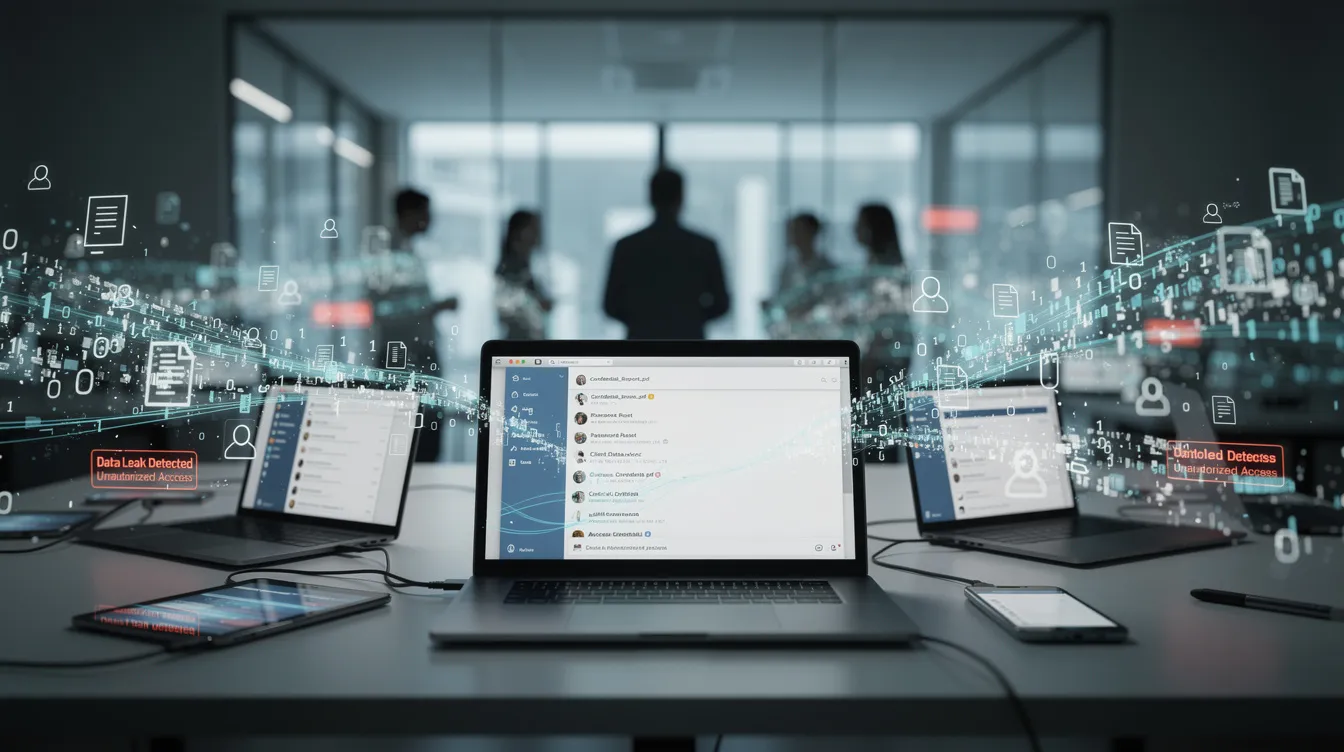
Once harvested, this data follows a predictable path. Cloud credentials appear on automated credential-trading platforms within hours. High-value secrets are auctioned in private Telegram channels to the highest bidder. Internally mapped network data is packaged and sold to ransomware groups conducting targeted attacks. The underground economy processes stolen data with industrial efficiency.
For organizations with active threat intelligence coverage of the deep and dark web, the LiteLLM breach would have generated early warning signals well before any internal detection:
Cloud provider credentials and API keys from the compromised builds would have been flagged the moment they appeared on credential marketplaces. A threat intelligence platform monitoring for your organization's domain names, email patterns, and known API key formats catches this exposure in near-real time allowing credential rotation before attackers use the stolen keys.
Threat actors discussing target organizations, sharing access to compromised environments, or advertising data for sale leave traces across dark web forums, paste sites, and private channels. REVA's continuous monitoring of these sources’ surfaces mentions your organization, your infrastructure, and your personnel including chatter that precedes an attack rather than following it.
Stolen source code and proprietary data frequently appear on paste sites and dark web repositories before it reaches mainstream code-sharing platforms. Monitoring for your organization's unique code signatures, internal variable names, or proprietary terminology catches intellectual property exposure that perimeter security tools will never see.
The most valuable threat intelligence is not confirmation of a breach it is intelligence that arrives before the breach occurs. Dark web forums frequently contain discussions of planned attacks, tools being prepared against specific industries or regions, and reconnaissance data about target organizations. For businesses in Lebanon, the UAE, Saudi Arabia, and Nigeria, understanding what threat actors are saying about your sector before they act is a decisive advantage.
The MENA region and Nigeria have seen exceptional growth in AI tool adoption across financial services, government, and technology sectors. LiteLLM and similar AI gateway libraries are commonly used by organizations building AI-powered products in the region. The speed of adoption has outpaced the security governance frameworks needed to protect it most organizations have no inventory of which AI libraries are deployed in their production environments.
Gulf sovereign wealth funds, MENA telecommunications providers, Nigerian fintech platforms, and Lebanese banking institutions are consistently listed as high-priority targets in dark web intelligence. An AI supply chain attack that harvests cloud credentials from any of these organizations gives a threat actor immediate access to critical financial and infrastructure systems.
Organizations subject to NCA ECC in Saudi Arabia, NESA in the UAE, NDPR in Nigeria, or ISO 27001 certification standards across the region have mandatory obligations around breach detection and disclosure. Without dark web monitoring, organizations may be unknowingly non-compliant their credentials are being traded, their systems are being accessed, and their regulators have not been notified because the organization itself does not know.
SHELT's REVA service provides continuous, automated monitoring across the full threat intelligence landscape surface web, deep web, and dark web with analyst-reviewed alerts specific to your organization and sector.
When REVA detects exposure tied to your organization, you receive an analyst-reviewed alert with the specific data found, the source, the assessed risk level, and recommended immediate actions not a volume of automated noise requiring internal analysis to interpret.
If your organization uses either tool, the immediate steps are:
How quickly does stolen data appear on the dark web after a breach?
High-value credentials, particularly cloud provider keys and AI service API keys frequently appear on automated trading platforms within hours of theft. More complex data packages,
such as network maps or source code, typically appear within 24 to 72 hours as threat actors process and package them for sale. This is why real-time monitoring matters more than periodic assessments.
Can REVA tell us if our organization was specifically affected by the LiteLLM breach?
Yes. A REVA engagement begins with a historical sweep of dark web and deep web sources for any existing exposure tied to your organization including credentials, domains, and data patterns consistent with your environment. For the LiteLLM incident specifically, we can search for credential patterns and data signatures consistent with the harvested data types to assess whether your organization appears in the relevant criminal marketplaces.
Supply chain attacks like the LiteLLM breach do not discriminate by organization size. The attack targeted any organization running the compromised software package from startups to enterprises. Credential trading is automated; your API keys are just as salary as those of a Fortune 500 company. In MENA markets, smaller organizations are frequently used as initial access points to reach larger clients, partners, or parent companies in the same supply chain.
A standard dark web scan is a point-in-time check against known breach databases it tells you what was exposed historically. REVA is continuously monitoring with analyst review it tells you what is being exposed now, what threat actors are saying about your industry this week, and what intelligence indicates may be coming next. The difference is between a medical check-up and having a doctor on call.
Your stolen CI/CD secrets and compromised credentials are already being traded, the question is whether you know about it. SHELT's REVA service monitors the deep web, dark web, and surface web in real time for any exposure tied to your organization leaked secrets, compromised accounts, stolen data, and early indicators of targeted attacks. Contact us at shelt.com to see what we find about your organization today.
.png)
© SHELT 2023 Privacy Policy | Terms & Conditions


.png)
