
Chainalysis’ November 6, 2026 breach exposed names, usernames, password hashes, and live session tokens for all users, and forced Reactor, Data Solutions, KYT, and address-screening products offline. Chainalysis occupies a unique and deeply sensitive position in the global financial ecosystem: it is the primary blockchain intelligence platform used by law enforcement agencies including the FBI, DEA, IRS Criminal Investigation, Europol, and their counterparts across dozens of countries to trace cryptocurrency transactions linked to ransomware, drug trafficking, sanctions evasion, and terror financing.
It is also the compliance backbone for hundreds of cryptocurrency exchanges, banks, and financial institutions that use its Know Your Transaction (KYT) product to screen transactions for illicit activity and meet regulatory requirements. For mid-market to enterprise organisations in regulated sectors such as financial services, telecom, and retail that depend on Chainalysis for blockchain intelligence, compliance, or security operations, this breach creates immediate third-party and supply chain risk. This analysis examines what was exposed, which services were disrupted, how the incident affects law enforcement activity and AML compliance, and what immediate response actions customers, partners, and security teams should take.

The scope of the breach disclosure is significant: Chainalysis confirmed that names, usernames, password hashes, and live session tokens for all users were exposed. The inclusion of live session tokens is the most immediately dangerous element. Unlike password hashes which require cracking time and may be protected by strong algorithms live session tokens can be used directly to access Chainalysis products as the authenticated user, with no need to know the password at all. Any session token that was active at the time of the breach is a direct access credential that must be treated as fully compromised.
Chainalysis stated that there is no evidence that investigation data was accessed or that attribution data was manipulated. This caveat is important but not fully reassuring. Chainalysis first disclosed the breach on November 4, 2026, then escalated it on November 6, 2026, describing the event as an incident and saying it is working with external cybersecurity experts. The exposed account details also raise targeted social engineering risks for affected individuals. 'No evidence of access' in the immediate aftermath of a breach is a statement about what has been found so far, not a confirmed clean bill of health. The forensic investigation will take days or weeks to complete, and the absence of evidence at this stage does not exclude the possibility that sensitive investigation data was accessed without leaving immediately detectable traces.
The products taken offline reflect the sensitivity of what was potentially at risk. Reactor is Chainalysis's primary investigation tool used by law enforcement and financial intelligence units to map blockchain transaction flows and attribute wallets to real-world entities. KYT is the transaction screening engine that hundreds of financial institutions use for real-time AML compliance. Address screening covers sanctions list checking for institutions required to block transactions involving sanctioned entities. Removing all of these simultaneously represents an extraordinary operational disruption to the global crypto compliance and law enforcement ecosystem.
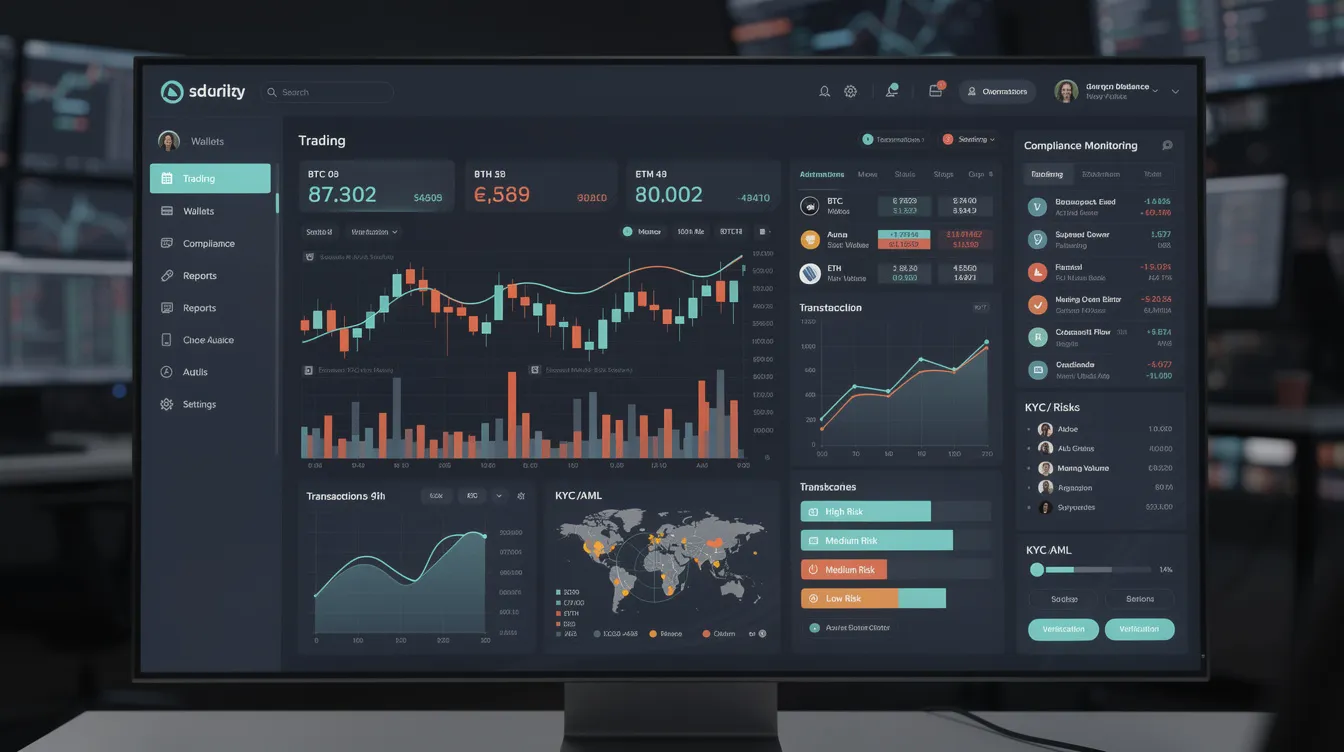
The Chainalysis breach is not primarily a story about Chainalysis customers losing their own data. It is a story about third-party risk at infrastructure scale. Chainalysis sits at the centre of a web of relationships and supports 1,500+ customers in the crypto industry: law enforcement agencies, financial regulators, cryptocurrency exchanges, businesses, banks, payment processors, digital asset custodians, and compliance technology providers all either use Chainalysis directly or rely on data and intelligence that flows through it.
Consider the implications for a cryptocurrency exchange using KYT for transaction screening, as nine of the top ten crypto exchanges use Chainalysis. With KYT offline, the exchange must either halt transaction screening creating regulatory compliance gaps or switch to alternative screening providers on an emergency basis, which may not have the same coverage quality. The exchange's ability to block transactions to sanctioned addresses, identify high-risk counterparties, and meet its own regulatory reporting obligations is directly degraded by the outage. This is third-party dependency risk manifesting at precisely the worst moment.
For financial institutions that have shared Chainalysis with information about their own investigations, internal compliance processes, or transaction histories, there is a secondary concern: the breach potentially exposed not just their user credentials but contextual intelligence about which addresses they monitor, which transactions they flag, and what investigative patterns they pursue. This operational intelligence has value to sophisticated threat actors particularly those whose own cryptocurrency activity is subject to Chainalysis monitoring.
The most consequential and least-discussed dimension of the Chainalysis breach is its potential impact on law enforcement operations. Reactor users include investigators from agencies that run long-term undercover operations tracking cryptocurrency flows connected to ransomware groups, narcotics networks, terrorism financing, and nation-state sanctions evasion. The integrity of that investigative data and the security of the analysts who compiled it are legitimate concerns following a breach of this nature. Chainalysis also said the incident was unrelated to other high-profile breaches, including the Binance hack.
If investigation data was accessed, even partially, the consequences could include the compromise of ongoing undercover operations, the advance warning to criminal organisations that their blockchain activity is under surveillance, and the exposure of law enforcement analysts and their institutional affiliations to threat actors who would benefit from that knowledge. Chainalysis's statement that there is 'no evidence' of investigation data access is therefore being read very carefully by its law enforcement customers, who have the most to lose if that statement proves incomplete.
This dimension of the breach also illustrates why supply chain and third-party risk management is not merely a compliance exercise. Organizations including government agencies that concentrate sensitive operational data in shared SaaS platforms are creating single points of failure for their most sensitive functions. The Chainalysis breach is a case study that will influence how law enforcement and intelligence agencies approach their use of commercial data platforms for years to come. It also highlights the need for stronger AI-driven threat detection across the cybersecurity industry.
Every Chainalysis customer should take three immediate actions regardless of whether products are currently accessible. First, treat all Chainalysis credentials as fully compromised: invalidate all existing sessions, force password resets for all user accounts, and audit which team members had active sessions at the time of the breach. Second, review what data your organisation has shared with Chainalysis including wallet addresses you monitor, transaction patterns you have flagged, and any internal investigation data stored within Reactor or Data Solutions and assess what the exposure of that data means for your operations and your counterparties.
Third, assess your regulatory position. If your organisation uses Chainalysis for AML transaction screening under a regulatory mandate, the outage creates a gap in your screening coverage that your compliance team needs to document. Many regulators accept temporary outages from third-party service providers with documented compensating controls and timely notification. Failure to document the gap, by contrast, is itself a compliance issue. Contact your regulator proactively if the outage extends beyond your permitted screening gap period.
For organisations that use Chainalysis data in conjunction with other systems feeding KYT results into internal risk management platforms, using Reactor findings to inform customer due diligence review whether those downstream systems have received or cached any data that may now be considered suspect pending confirmation of investigation data integrity.
The Chainalysis breach is a canonical example of the scenario that SHELT's Risk and Vulnerability Assessment service addresses through its third-party and supply chain risk module: REVA is vital for managing risk from critical vendors whose compromise creates direct operational, compliance, and security impacts on customers simultaneously. SHELT's REVA assessment maps your organisation's third-party dependencies, assesses the data and access each vendor holds, and identifies which vendors and suppliers represent systemic risk where a single vendor's breach would create cascading impacts across your operations.
For organisations in the cryptocurrency, financial services, and compliance technology sectors, SHELT's REVA includes a dedicated crypto infrastructure risk module covering exchange counterparty risk, blockchain intelligence vendor risk, smart contract audit dependencies, and custody chain security. The Chainalysis breach demonstrates that this risk category is not theoretical it has now produced a confirmed, large-scale breach of a systemically important compliance infrastructure provider.
SHELT works with organisations globally to build third-party risk management programmes that go beyond vendor questionnaires and annual assessments, implementing continuous monitoring of critical vendor security posture and contractual controls that help identify vulnerabilities before they create cascading impacts on your data and operations in the event of a vendor breach. The question is not whether your critical vendors will be targeted, it is whether your organization has controls and contractual protection to manage the impact when they are.
As of November 6, Chainalysis had taken Reactor, Data Solutions, KYT, address screening products, and the login page offline as part of its breach response. Users should check the Chainalysis status page and official communications for the latest update on service restoration. Assume products remain offline until confirmed otherwise.
Treat all credentials as fully compromised. Do not wait for Chainalysis to force a password reset; initiate one for all user accounts in your organisation immediately, treating exposed passwords as sensitive data. Revoke any API keys or service account tokens used for KYT or Data Solutions integrations by users provisioned on the platform. Any live session token from before the breach should be considered a compromised credential.
Potentially yes. If you use Chainalysis KYT or address screening to meet AML or sanctions screening regulatory requirements and those products are offline, you have a screening gap. Document the gap, implement compensating controls such as manual review or alternative screening tools for the duration of the outage, and contact your regulator proactively if the outage extends beyond your acceptable gap period, as documented non-performance by a critical screening vendor can create financial and operational risk if screening obligations are not maintained.
Chainalysis stated there is no evidence investigation content was accessed. However, this is an early-stage assessment, the forensic investigation is ongoing, and Chainalysis is conducting further analysis to determine the scope of affected records. Law enforcement agencies using Reactor should consult with Chainalysis directly about the specific scope of data that may have been at risk and take appropriate operational security steps for active investigations pending a final forensic report, since any compromise could aid investigations into cryptocurrency fraud as well as other illicit activity.
SHELT's REVA team can assist with a rapid third-party breach impact assessment; Chainalysis data has helped seize $34 billion in illicit funds, underscoring why the incident matters. This assessment covers: mapping what data your organisation shared with Chainalysis, assessing breach impact for organisations relying on Chainalysis as a critical third party, reviewing downstream systems that consumed Chainalysis data, and identifying compensating controls for the duration of the outage. Contact SHELT for an urgent advisory engagement.

© SHELT 2023 Privacy Policy | Terms & Conditions



