On June 19, 2026, a Russian-speaking threat actor published credential data for 73,932 internet-facing Fortinet FortiGate firewalls and SSL VPN gateways across 194 countries in what researchers immediately named FortiBleed, the largest single-source VPN credential leak ever recorded; unlike a traditional software vulnerability or zero-day exploit, it is a credential exposure campaign that gives attackers persistent access to Fortinet devices. Reported estimates put the broader impact at roughly 74,000 to 86,644 Fortinet firewalls affected. The exposed dataset covers 21,632 unique domains, and named victims including Chevron, Samsung, Foxconn, AT&T, and Toyota confirm the global reach of the exposure. Independent security researcher Kevin Beaumont examined the dataset and confirmed the credentials are genuine and currently active. CISA confirmed active exploitation of Fortinet devices on June 18, 2026. At least four affected organizations were fully compromised, with attackers breaching the firewall, reaching internal systems, and moving laterally across the network.
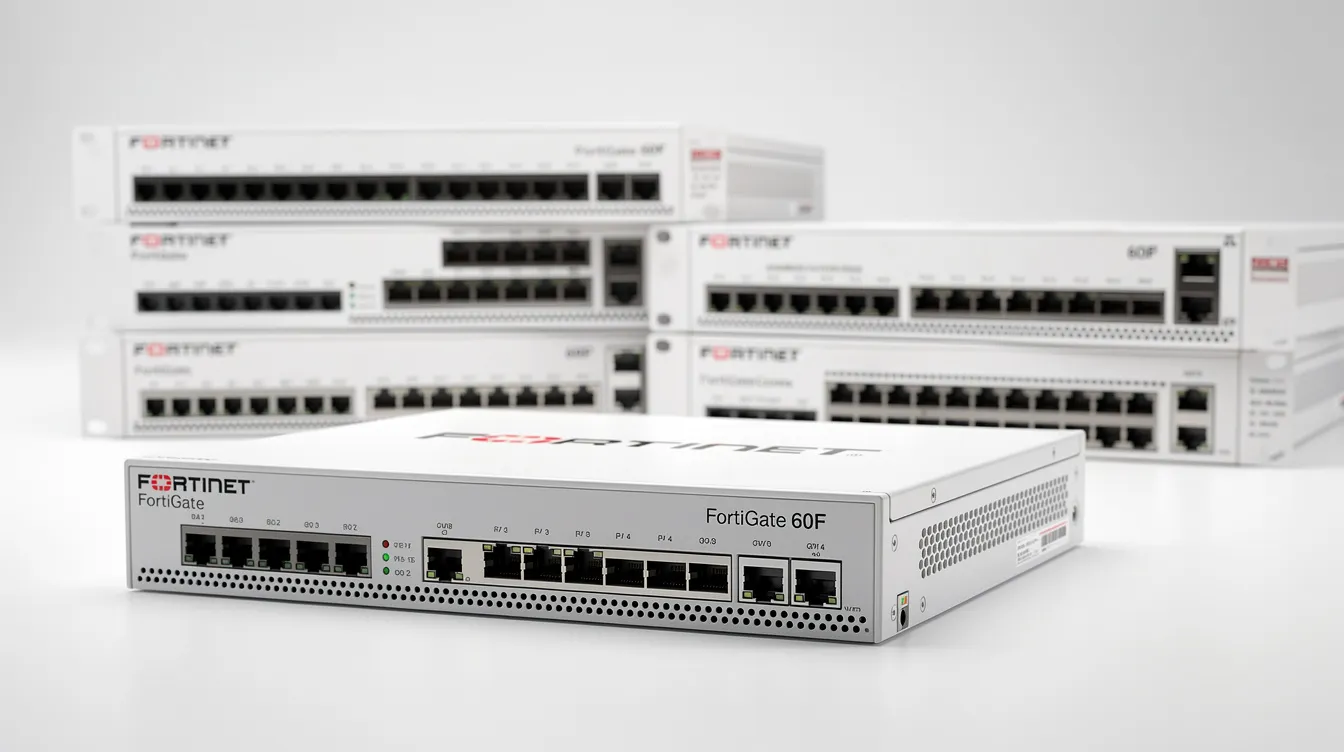
MENA-region devices are present in the data, making this an immediate priority for organisations in regulated sectors across Lebanon, UAE, KSA, and Nigeria running FortiGate appliances, especially mid-market and enterprise teams in financial services, telecom, government, manufacturing, and energy. This article explains what FortiBleed means for affected organizations, how the attack targeted FortiGate SSL VPN credentials, which sectors and regions are exposed, what to do now across patching, credential rotation, MFA, log review, and monitoring, where compliance risk enters the picture, and how SHELT’s SOC supports detection, containment, and incident response before compromised access turns into a broader breach.
The attacker used a 45-GPU Hashtopolis cluster to crack SSL VPN session hashes at industrial scale, executing 1.16 billion credential-stuffing attempts across the process. Once valid credentials were obtained, the group used them to conduct reconnaissance, exfiltrate device configuration files, and in documented cases establish persistent access inside target networks before any breach detection occurred.

Hudson Rock published a free public lookup tool allowing organisations to check whether their domain appears in the leaked dataset. The tool received immediate heavy use following the disclosure, with multiple MENA-region domains appearing in early verification scans. Any organisation that has not yet checked this tool should do so as an immediate first step.
The scope of the dataset of nearly 74,000 devices across 194 countries reflects the attacker's approach: indiscriminate collection across a known-vulnerable product category rather than targeted selection of high-value victims. This means that organisations of all sizes and sectors who deployed FortiGate SSL VPN are in scope, not only those that consider themselves high-profile targets.
Any organisation running Fortinet FortiGate with SSL VPN enabled and firmware versions preceding the 2025 security advisories is potentially in the dataset. Upgrade to FortiOS versions 7.2.11 or later. The sectors with highest FortiGate adoption in MENA financial services, telecoms, government, manufacturing, and energy are exactly the sectors most represented in the known victim set.
Lebanese commercial banks and financial institutions face dual exposure. A compromised FortiGate in a banking environment provides attackers with visibility into network traffic, interbank communications, and credential stores for downstream systems. It can also be used to map the internal network and reach internal systems, including Active Directory. The persistence mechanisms documented in this campaign mean that even organisations that have patched their firmware may remain compromised from credential-harvesting that occurred before the patch was applied.
UAE financial institutions operating under CBUAE cyber risk frameworks and DIFC/ADGM data protection obligations have an additional compliance dimension to consider. Management access should be restricted to trusted internal networks, and external access to FortiGate management interfaces should be removed. A confirmed FortiGate compromise that is not disclosed and remediated on the required timeline creates regulatory exposure alongside the technical risk.
Nigerian fintech organisations including those in the Flutterwave and Paystack ecosystem, and their integration partners, should verify their FortiGate status immediately. The cost of credential theft in a fintech context extends from internal system access to downstream fraud affecting customers across the platform.
The first action for any organisation running FortiGate SSL VPN is to use Hudson Rock's public lookup tool to determine whether their domain appears in the leaked dataset. This step should be completed before any other assessment activity, because the result determines the urgency of everything that follows.
All FortiGate SSL VPN credentials should be rotated immediately, regardless of dataset lookup results. If the credentials are not in the current published dataset they may be in undisclosed portions, and the cost of credential rotation is minimal compared to the risk of leaving potentially compromised credentials active. Before or alongside password changes, terminate all active SSL VPN and administrative sessions.
FortiOS firmware must be updated to the current patched version across all appliances. Patching closes the authentication bypass vectors used for initial access. Audit Active Directory for unauthorized accounts within two weeks, then continue regular audits. It does not remove persistence mechanisms that were planted before the patch, which is why firmware update must be followed by a compromise assessment examining SSL-VPN directory structures and VPN session logs for indicators of pre-patch activity.
Multi-factor authentication should be enabled on all VPN access points if not already active. MFA does not eliminate credential theft risk but significantly reduces the attack surface by requiring a second factor that credential dumps do not contain. It should also be enforced for remote access and administrative interfaces, and organisations should assume exposed credentials may already be accessible to threat actors.
SHELT's SOC services provide 24/7 monitoring with native FortiGate integration, helping security teams improve security posture through continuous monitoring of FortiGate devices and related access paths, including continuous VPN log analysis for anomalous session patterns that indicate credential-based re-entry following the initial compromise. Our detection logic specifically addresses the FortiBleed threat profile: geographic improbability in VPN session sources, access timing anomalies, and resource access patterns outside the authenticated user's established baseline.

For organisations that find their domain in the exposed dataset, SHELT activates an emergency incident response engagement covering threat hunting for FortiBleed-specific TTPs, forensic examination of SSL-VPN directory structures for symbolic link persistence mechanisms, review of VPN authentication logs for credential-based re-entry from unexpected sources, a review of administrative accounts and administrator credentials, and a full credential exposure analysis across network perimeter systems. We also tune detection rules to identify suspicious activity, malicious activity, lateral movement, and privilege escalation across affected systems during investigation and containment.
SHELT serves the full MENA region. Our SOC is monitoring FortiBleed-related indicators of compromise across Lebanese, UAE, KSA, and Nigerian environments currently, and our IR retainer capacity is available for organisations that require immediate engagement following a confirmed FortiGate compromise.
Patching the firmware closes the authentication bypass used to harvest the credentials in the first place and addresses known issues including CVE-2023-27997, which enables remote code execution without authentication, and CVE-2026-24858, which allows unauthorized admin account creation in FortiCloud. It does not remove any persistence mechanisms that were planted during the period when the vulnerability was exploitable, and attackers may still gain unauthorized access through known Fortinet flaws before moving into internal Active Directory environments. Organisations that patched promptly are no longer vulnerable to new exploitation through the same vector, but they may remain compromised from activity that preceded the patch. A compromise assessment specifically examining SSL-VPN directory structures for symbolic links and reviewing VPN authentication logs for credential-based access from unexpected geographic sources is the required step after patching to confirm that the environment is clean. For administrative access, adopt zero trust architecture to reduce implicit trust in exposed management interfaces.
The Hudson Rock tool queries the dataset that has been made publicly available. Other public reporting, including the Singapore Cyber Security Agency, described credential exposure affecting over 70,000 devices. This represents a significant volume of credentials, but it is not necessarily the complete dataset held by the attacker or by other actors who may have obtained the data before or after the public disclosure, and threat actors may still have access through exposed credentials even when a domain is absent from the public lookup. A negative result in the lookup tool reduces but does not eliminate the risk. The appropriate posture is to rotate all FortiGate VPN credentials regardless of lookup results, apply all current firmware patches, and conduct at minimum a review of recent VPN authentication logs for anomalous session activity, including monitoring for suspicious VPN sessions and signs attackers are trying to avoid detection.
The immediate sequence is: check Hudson Rock's lookup tool for your domain, rotate all FortiGate SSL VPN credentials, update FortiOS firmware to the current patched version, enable MFA on all VPN endpoints if not already active, restrict FortiGate management interfaces and other administrative interfaces to trusted internal networks or tightly controlled remote access paths, and review VPN session logs from the past 90 days for anomalous patterns indicating credential-based access from unexpected sources. If the domain appears in the lookup results, treat the environment as compromised and engage SHELT or another qualified incident response provider for a full forensic assessment before taking any other action. If MSPs or suppliers manage these devices, get threat intelligence support and perform a third party risk review. Acting on compromised infrastructure without proper forensic sequencing can destroy evidence needed to understand the full scope of the breach, and these steps also help reduce the organization's attack surface in a fast-moving threat landscape.

© SHELT 2023 Privacy Policy | Terms & Conditions



